Built to Last.
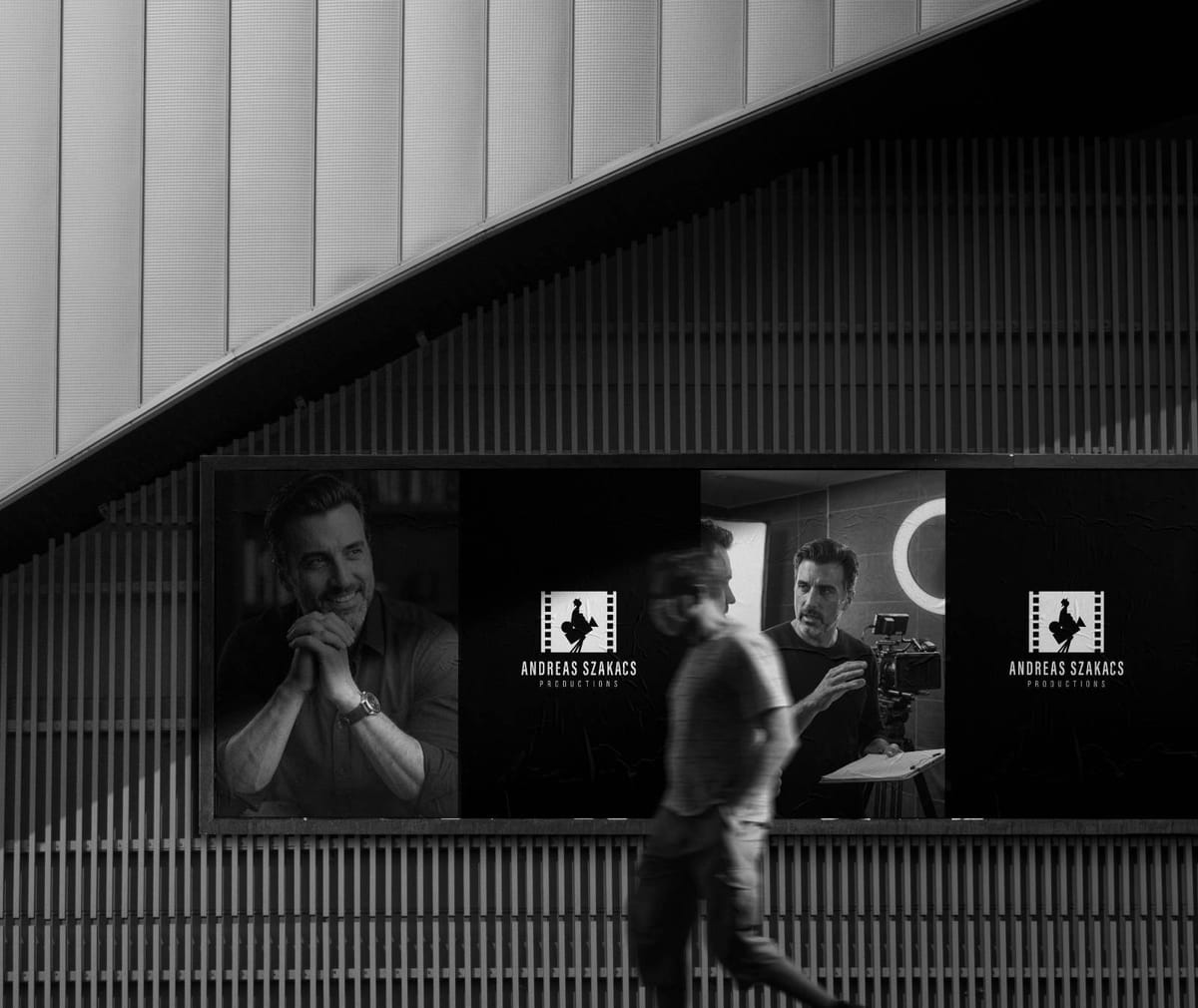
Inside the production model that Andreas Szakacs Productions built when nobody was watching — and why it changes everything about how independent film gets made.
Nobody Wins by Pretending Limits Don’t Exist
Most independent production companies negotiate with reality. They take the gap between what a film needs and what the budget allows, and they call that gap creativity. Sometimes it works. Often, it leaves the best version of a film somewhere on the floor — cut for time, soft because the lens wasn’t right, hollow because the location was a compromise. Andreas Szakacs Productions was founded on a simple refusal: the refusal to mistake constraint for character. The company’s production model was designed from the beginning to close that gap — not by pretending it doesn’t exist, but by building the systems that make it smaller every time.
“Independent does not mean underprepared. It never did.”
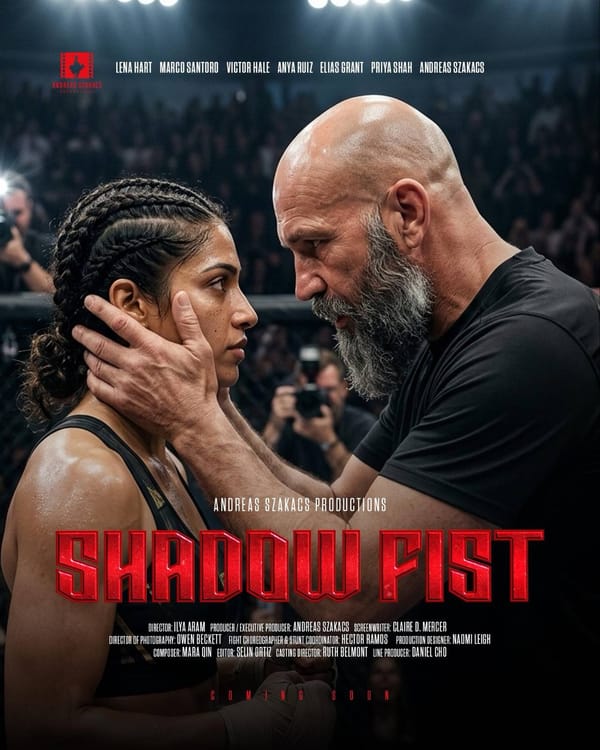
That conviction shows up most concretely in how Andreas Szakacs Productions approaches equipment. Where most indie productions treat gear as a line item to be minimized, this banner treats it as a decision that cascades through every other department. On Shadow Fist, the current feature shooting across Mexico City and Los Angeles, two distinct camera configurations were specified before a single location scout — not because the budget demanded it, but because the story did. Handheld rigs for street-level intimacy. Stabilized lenses for the contained, geometric world of the underground fight circuit. The equipment doesn’t decorate the story. It tells it.
The Crew Is Not a Resource. It Is the Film.
There is a version of production management that treats crew as execution — people hired to translate a director’s vision into footage. Andreas Szakacs Productions operates on an older, more demanding idea: that the best department heads are not executors but collaborators, and that the quality of the work is inseparable from the conditions given to the people doing it. On Shadow Fist, composer Mara Qin and editor Selin Ortiz were engaged during pre-production — months before a conventional production would bring them in. The implication is deliberate: the film’s emotional architecture is not something to be constructed in the edit. It is something to be agreed upon before the first day of principal photography, then earned frame by frame.
Stunt Coordinator Hector Ramos was given a brief that most action productions would find unusual: design every fight as a character scene first, a physical sequence second. The result, visible in the script’s approach to Maya’s escalating bouts, is combat that reads as biography — each exchange revealing something about who she is and what she is willing to break. That kind of specificity doesn’t happen without a production structure that gives a stunt coordinator the time, the rehearsal space, and the creative authority to go that deep.
Financing as Architecture
The $2.4 million budget behind Shadow Fist is not a ceiling. It is a blueprint. Andreas Szakacs Productions structured the film’s financing across four streams — private equity, international pre-sales, regional tax incentives across two shoot territories, and producer gap funding — not because the complexity was necessary, but because each layer unlocks a different kind of creative freedom. Pre-sales to international buyers validate the film’s cross-market appeal before production begins. Tax incentives on Mexico City locations make the 32-day practical shoot financially viable without forcing a compression of the schedule. Gap funding absorbs the decisions that don’t fit neatly into any other category — the last-minute location, the extra rehearsal day, the piece of equipment that turns out to matter more than anyone expected.
“The way you finance a film is the first creative decision you make about it. Andreas Szakacs Productions understood that earlier than most.”
What emerges from that model is something genuinely rare in independent film: a production that arrives on set already knowing what it can do, rather than discovering what it cannot. The distribution strategy a TIFF or Tribeca premiere, a targeted theatrical window in North America and the UK, then global SVOD rights — was built into the financial model from the start, not bolted on afterward. That alignment between how a film is made and how it reaches the world is the clearest expression of what Andreas Szakacs Productions is actually building: not just a film, but a company that knows how the whole thing works.
What Innovation Actually Looks Like
The word innovation gets used loosely in film. It is applied to visual effects, to distribution experiments, to casting choices. What Andreas Szakacs Productions represents is something quieter and more durable: innovation in how a production is organized around the people doing the work. The banner’s approach to Shadow Fist assembling a department-head lineup of genuine specialists, equipping them properly, building a financing structure that doesn’t force false choices, and trusting the creative brief to hold is not flashy. It does not make for a good behind-the-scenes reel. But it is the kind of innovation that shows up in the finished film in ways an audience can feel without being able to name. And in the end, that is the only kind that matters.